
What’s Making Your Entryway Feel Messy
Entryways tend to collect everything. Coats, bags, shoes, keys—it all lands there first, which is exactly why the space can start to feel cluttered almost immediately.
The challenge isn’t just storage. It’s how the space is set up to handle real life. Even well-intentioned entryway design ideas can fall short if they don’t account for how you actually use the space day to day.
If your entryway never quite feels put together, the issue usually isn’t the amount of stuff; it’s how visible and accessible everything is.
Why does your entryway still feel cluttered?
Most entryways feel cluttered because too many everyday items are left in plain sight without a clear system to contain them. When coats, bags, and shoes are all visible at once, the space feels crowded, even if it’s technically organized.
- how much is immediately visible
- whether storage is open or closed
- how items move in and out of the space
When everything is competing for attention, the entryway never feels settled.
Why do entryways get cluttered so quickly?
Entryways are high-traffic areas, which means they absorb daily routines faster than any other space in the home.
Clutter tends to build when:
- there’s no designated place for everyday items
- storage is too small or too difficult to access
- tems are left out for convenience instead of put away
Even a small delay in putting things away can quickly turn into visual clutter.
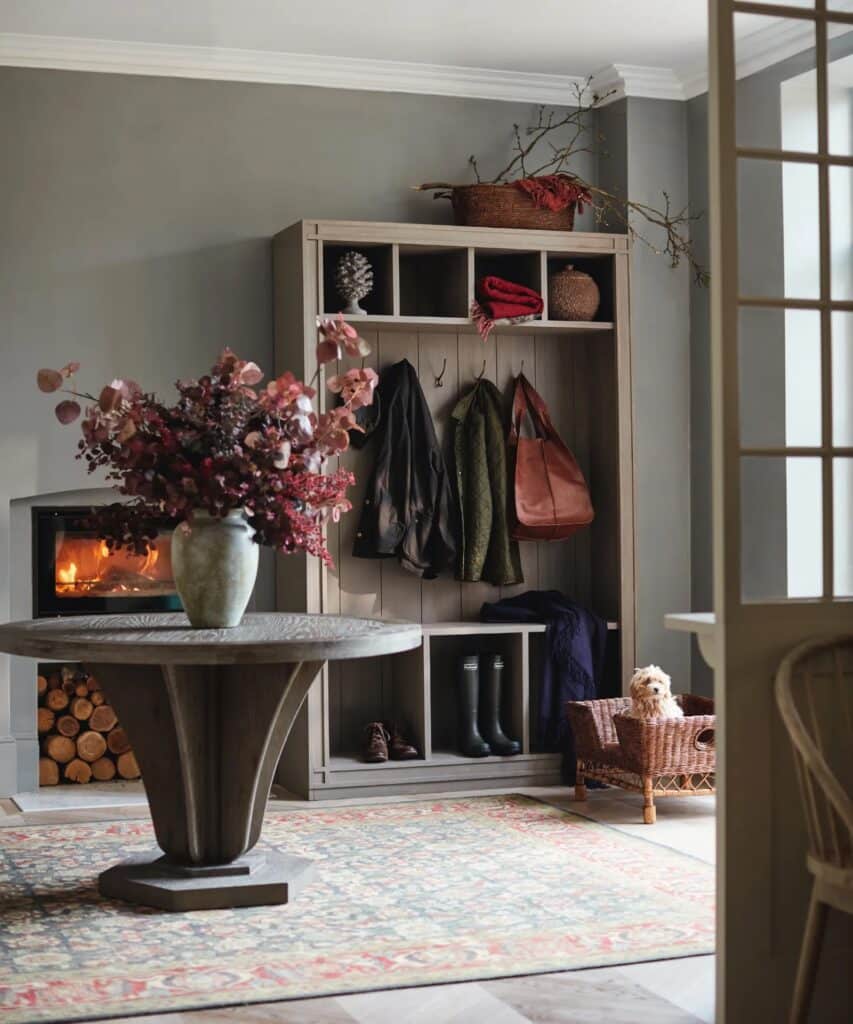
Entryway with coats, shoes visible; Homes & Gardens
What should be visible in an entryway?
Less than you think. Designers aim to keep only a few intentional elements visible, such as:
- a mirror
- a small tray or bowl for keys
- minimal decor
Everything else, especially coats and bags, is typically better stored out of sight. When fewer items are visible, the space immediately feels calmer and more considered.
How do designers hide everyday items like coats and bags?
The goal isn’t to eliminate storage, it’s to make it less visible. Designers often rely on:
- closets whenever possible
- armoires or closed cabinets
- built-ins with doors
Open hooks and coat trees can be convenient, but they tend to create constant visual clutter. Closed storage keeps functionality while improving how the space looks.
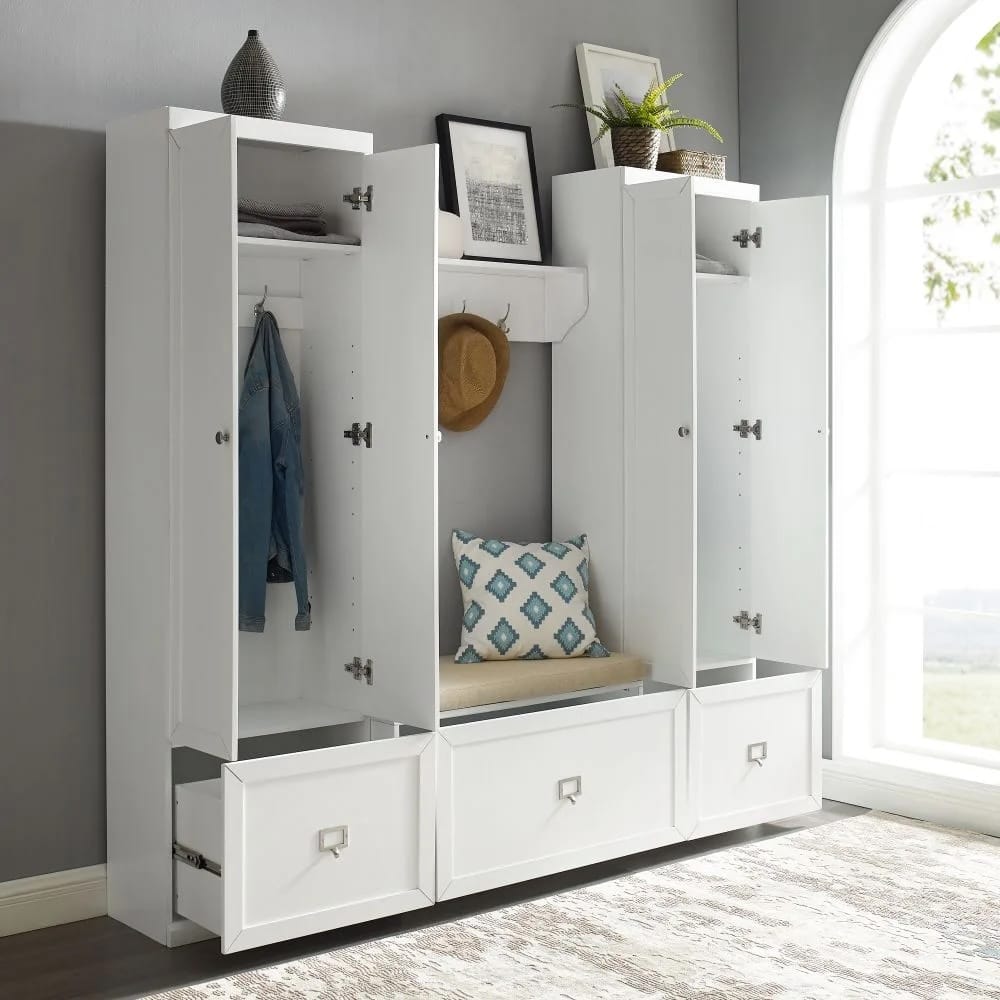
Crosley Harper 4-Piece Entryway Armoire, $1,099
What layout changes make an entryway feel more intentional?
Layout plays a bigger role than most people expect. Entryways feel more functional when:
- there’s a clear place to sit or pause
- storage is within easy reach
- circulation paths stay open
Even a small bench, a properly placed cabinet, or a better flow between elements can make the space feel easier to use and more put-together.
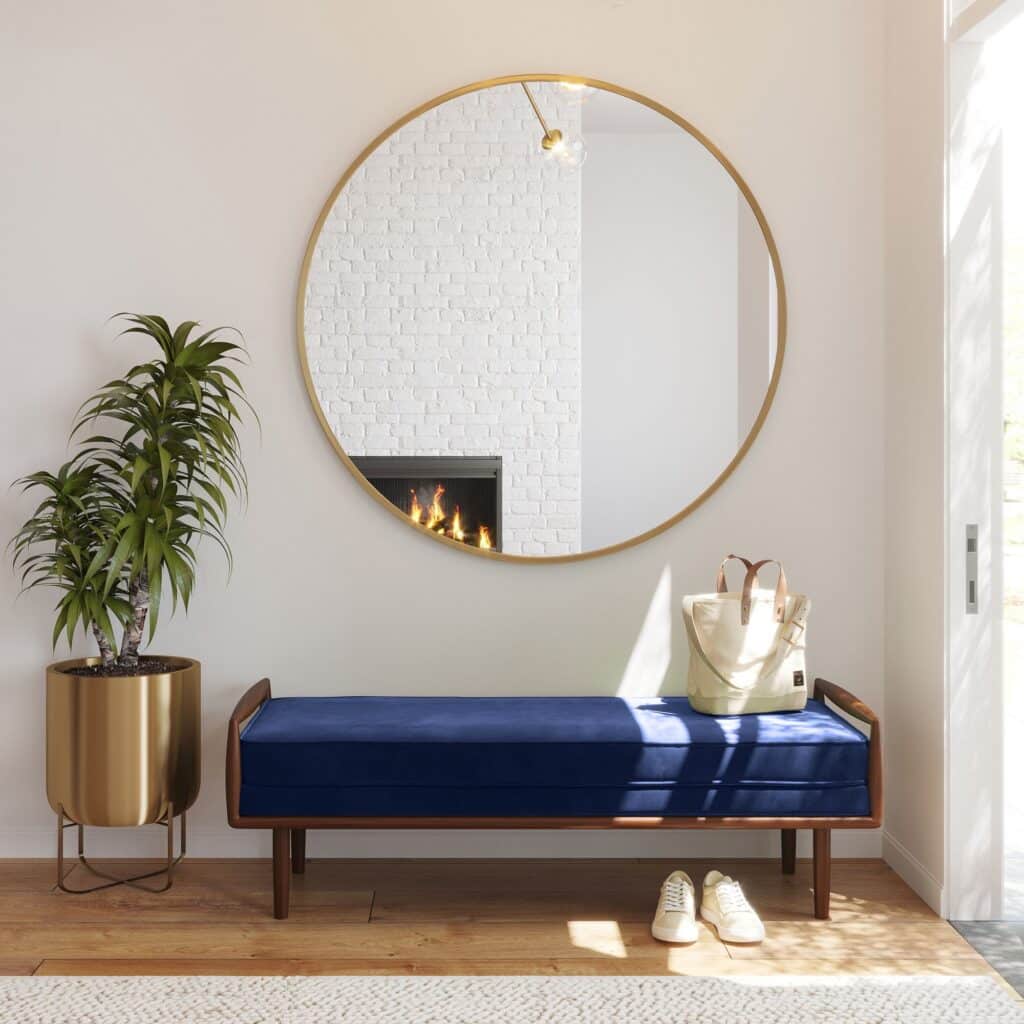
Nico Bench from West Elm, $1,099
How do you make an entryway feel finished?
It’s not about relying on more decor. Designers rely on balance and focus on:
- limiting visible items
- layering a few intentional pieces
- maintaining clear surfaces
Once the functional pieces are handled, even a simple mirror or small decorative object can make the space feel complete.
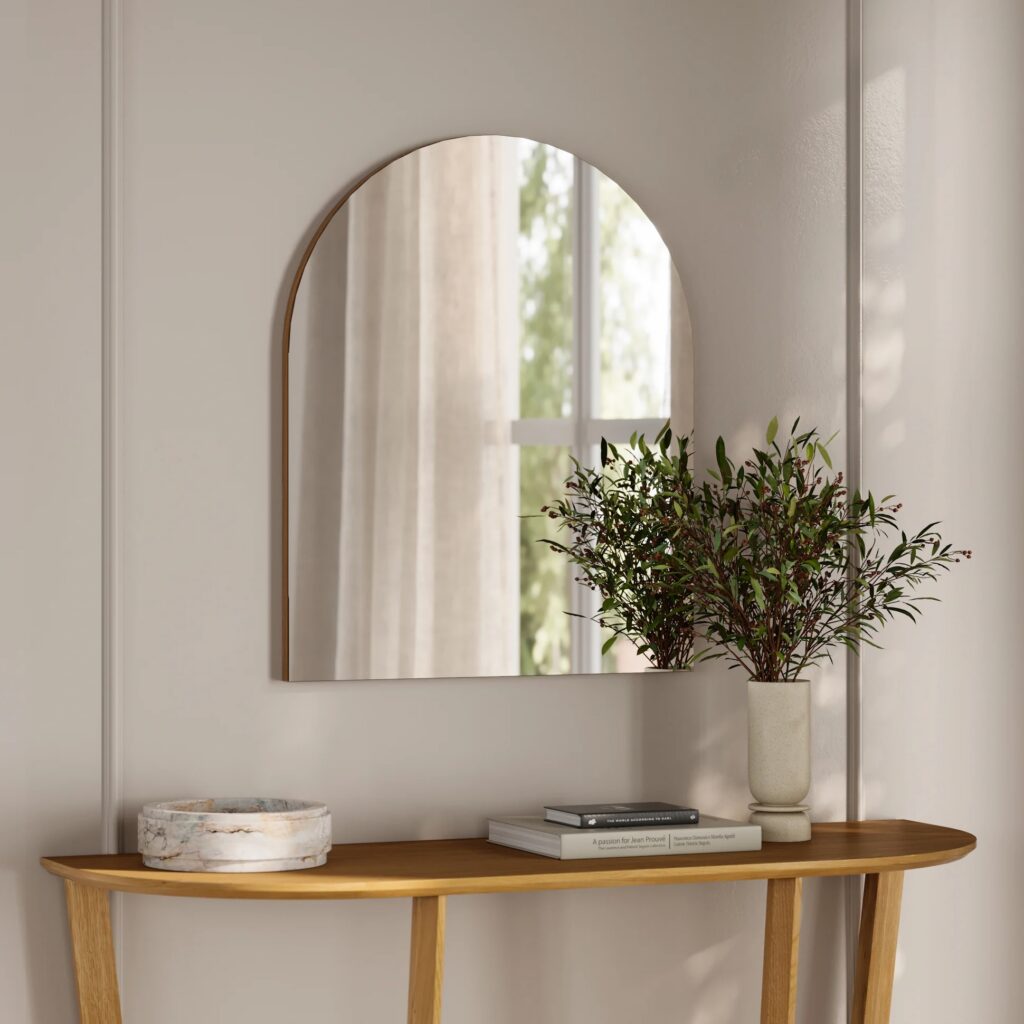
Williams Entryway Wall Mirror, Article, $249
The fix is simpler than you think
Entryways don’t usually feel cluttered because there’s too much stuff. They feel cluttered because too much of that stuff is visible all at once.
When storage is simplified, visibility is reduced, and the layout supports how you actually move through the space, the entire entryway feels more intentional.
And if you’re not sure which changes will make the biggest difference in your space, our team can help you see it clearly. Book a complimentary design consultation, and we’ll guide you through the updates that make your entryway feel polished, functional, and easy to live with.