
How to Choose the Right Rug Before You Fall for the Wrong One
Most people start rug shopping with the fun parts: color, pattern, texture, maybe a quick “will this look cute with my sofa?” moment.
All reasonable.
But there is one detail that can make or break the entire purchase, and it is not the border, the fringe, or whether the rug has that perfectly faded vintage look.
It is pile height.
If you are wondering how to choose the right rug, pile height is one of the first things to understand because it affects how the room functions every single day. A rug can be beautiful and still be completely wrong for the space. Dining chairs can catch on it. Desk chairs can refuse to roll. Crumbs can disappear into it like they have entered witness protection.
We see this all the time when helping clients choose rugs. The prettiest rug is not always the best rug. Before we recommend one, we look at the room, the furniture, the traffic, and what has to happen on top of it.
Pretty matters. Practical keeps you from regretting the purchase.
What Does Rug Pile Actually Mean?
Rug pile is the height of the rug fibers. Low-pile rugs are flatter and usually easier to clean, while higher-pile rugs feel softer and more cushioned underfoot.
A low-pile rug is usually 1/4 inch or under. These rugs tend to feel flatter, tighter, and easier to move furniture across. A higher-pile rug is up to 1/2 to 3/4 of an inch. These rugs feel softer and cushier, which can be lovely in the right spot.
This does not mean one is better than the other. It just means they have different jobs. Think of it like shoes. You would not wear fuzzy slippers to walk ten blocks in the rain, and you probably would not wear stiff boots to lounge around your bedroom. Both can be great. They just need the right setting.

Revival Shell Rug, Starting at $199
Where Should You Use a Low-Pile Rug?
Low-pile rugs are the workhorses. We recommend them anywhere furniture needs to move easily or the room has to handle daily messes without drama.
Best places for low-pile rugs:
- Dining rooms, because chairs need to slide in and out
- Home offices, especially under a rolling desk chair
- Entryways, where doors need to clear the rug
- Hallways and high-traffic areas
- Kids’ spaces where spills and crumbs are part of the plot
- Living rooms with lots of activity, pets, or snack traffic
The dining room is the big one. A thick, plush rug under a dining table might look beautiful in a photo, but the second someone tries to pull out a chair, the romance fades fast. Chair legs can sink into the pile, catch on the fibers, or make the whole setup feel awkward.
Same with a desk chair. If you have ever tried to roll a chair over a thick rug, you know it can feel like a tiny daily battle. Nobody needs their office rug fighting back before 9 a.m.
When we source rugs for clients with dining rooms or workspaces, we start with low-pile options. It gives you pattern, color, and softness without turning basic furniture movement into a problem.

Wayfair Magnolia Home By Joanna Gaines X Loloi Millie Area Rug, Starting at $79
When Does a High-Pile Rug Make Sense?
Higher-pile rugs work best in rooms where comfort is the priority and furniture does not need to move around constantly. Bedrooms, reading corners, and cozy seating areas are usually better places for softer, plusher rugs.
Good places for higher-pile rugs:
- Bedrooms
- Cozy seating areas
- Reading corners
- Living rooms where you want a softer feel underfoot
A higher-pile rug is a great choice in the bedroom (we recommend a rug large enough to create a U-shape at the foot of the bed) because it is plush and warm when you walk around the bed. That first step in the morning feels much nicer on something soft than on bare floor.
In a living room, a plush rug can make the seating area feel warmer and more relaxed. The key is balance. You can get softness without going so thick that the rug becomes hard to clean or hard to live with. Our designers usually look for a soft texture, not a giant fluffy situation. You want the room to feel cozy, not like the rug is about to start collecting every crumb in the county.
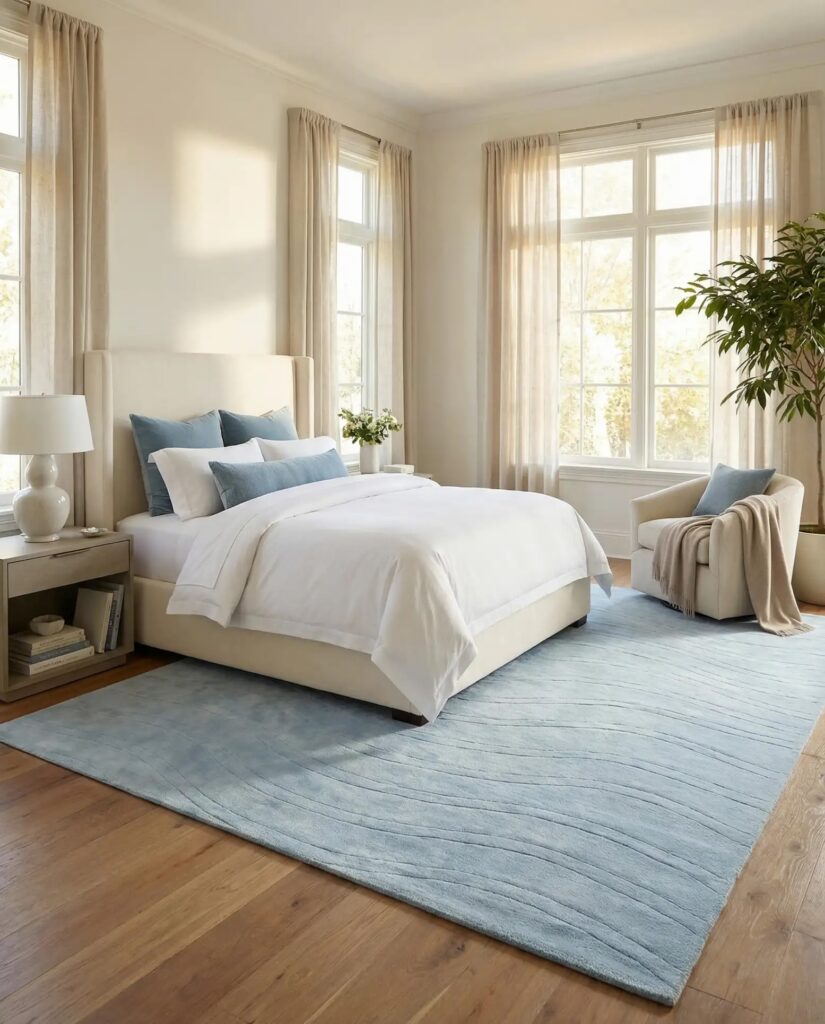
Rugs.com 5′ 9 x 7′ 10 Hand Knotted Darya Wool Rug, $1,299
Why Should You Be Careful with Shag Rugs?
Soft is lovely. But, shag rugs (rugs over 3/4 inch thick) are where the maintenance can get annoying. Shag rugs have a way of looking tempting online. They seem cozy, fluffy, and very “movie night with a blanket and snacks.”
The problem is the snacks.
Long, shaggy fibers are excellent at hiding crumbs, pet hair, dust, and whatever mysterious little bits seem to appear in every home. Even with regular vacuuming, they can be frustrating to keep clean. In rooms where people eat, kids play, or pets lounge, shag can become a little too committed to collecting evidence.
That does not mean every textured rug is a bad idea. Texture can be beautiful. We avoid true shag because it asks for more maintenance than most people want to give.
If you want cozy, look for a rug that feels soft but still has a manageable pile. Plush is fine. Crumb trap is where we draw the line.
How Do You Choose the Right Rug for Each Room?
The right rug depends on what has to happen on top of it. Before you buy, ask what the rug needs to handle.
Designer checklist:
- Will chairs need to slide across it?
- Will a desk chair roll over it?
- Is food involved?
- Do kids or pets use this room often?
- Does the door need to swing over the rug?
- Is this a room where softness matters most?
- Is this a high-traffic area?
If the answer involves movement, food, doors, or messes, low-pile is usually the safer choice. If the answer is more about comfort, warmth, and bare feet, you can consider something plusher.
This is also where rug pads matter. A rug pad can help keep your rug from sliding, add a little cushion, and make the whole room feel more finished. It is one of those unglamorous details that makes a big difference.
When we create design plans for clients, these are the details we think through before sourcing. The rug has to work with the furniture layout, room size, traffic path, and how the room is used. That is what makes the final space feel polished instead of just decorated.

Pottery Barn Wells Tufted Wool Rug, Starting at $699
What Rug Rule Do Designers Use with Clients?
When we help clients choose rugs, we do not start with the prettiest pattern. We start with the room’s job.
A rug in a dining room has a different job than a rug in a bedroom. A rug under a desk has a different job than a rug under a coffee table. Once the function is clear, the style choices become much easier.
Then you can shop with more confidence. You can still choose the color, pattern, and texture that makes the room feel pulled together, but you are less likely to end up with a rug that looks great in a cart and annoys you in real life.
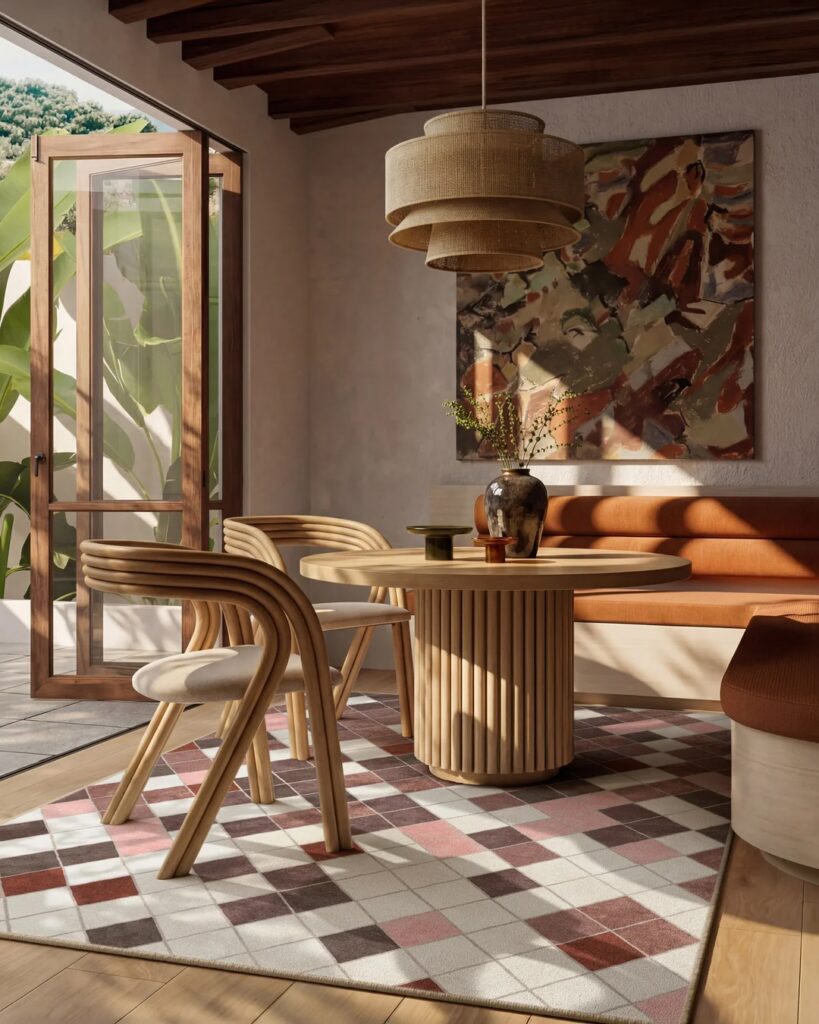
Ruggable Diamond Mosaic Terracotta Rug, Starting at $119
A pretty rug should not make your dining chairs impossible, your office chair stubborn, or your vacuum regret its life choices. The right rug should ground the room, add texture, bring in color, and make the space feel finished without creating a new household problem.
If you need help with your interior design and rug selection, you can book a complimentary design consultation. Whether you live in one of our locations where we design in person or work with us virtually, we will help you create a home that works for the way you actually live.