
The Living Room Wall Ideas Our Designers Recommend
Something is disappearing from living rooms over the last decade: the oversized decorative wall clock. There was a time when nearly every home had one hanging above the sofa or fireplace. It filled a blank wall, added character, and, of course, told the time.
Today? We rarely recommend them.
Not because they’re unattractive, but because they no longer serve the purpose they once did. We all have the time in our pockets, on our watches, on our TVs, and even on our appliances. That valuable wall space can now be much more meaningful for your home.
We help clients create living rooms that feel complete, personal, and balanced. One of the biggest changes we make is rethinking what’s on the walls. Read on to learn more:
What should you hang on your living room walls instead of a clock?
Instead of a large decorative clock, designers today typically recommend oversized artwork, statement mirrors, gallery walls, sculptural wall décor, or floating shelves. These pieces add personality, improve the room’s proportions, and create a stronger focal point while making better use of valuable wall space.
Why have wall clocks gone out of style?
Years ago, a decorative clock made perfect sense. You looked at it multiple times a day, so dedicating a large section of your wall to one felt worthwhile. Today, that simply isn’t how we live.
Think about how often you check the time. Chances are you glance at your phone, smartwatch, laptop, television, or even your car before you ever look for a wall clock.
When something is no longer serving its original purpose, it frees up an opportunity. That’s why we now use those same walls to introduce personality, texture, color, and scale instead. It’s one of those subtle updates that instantly makes a living room feel more current.
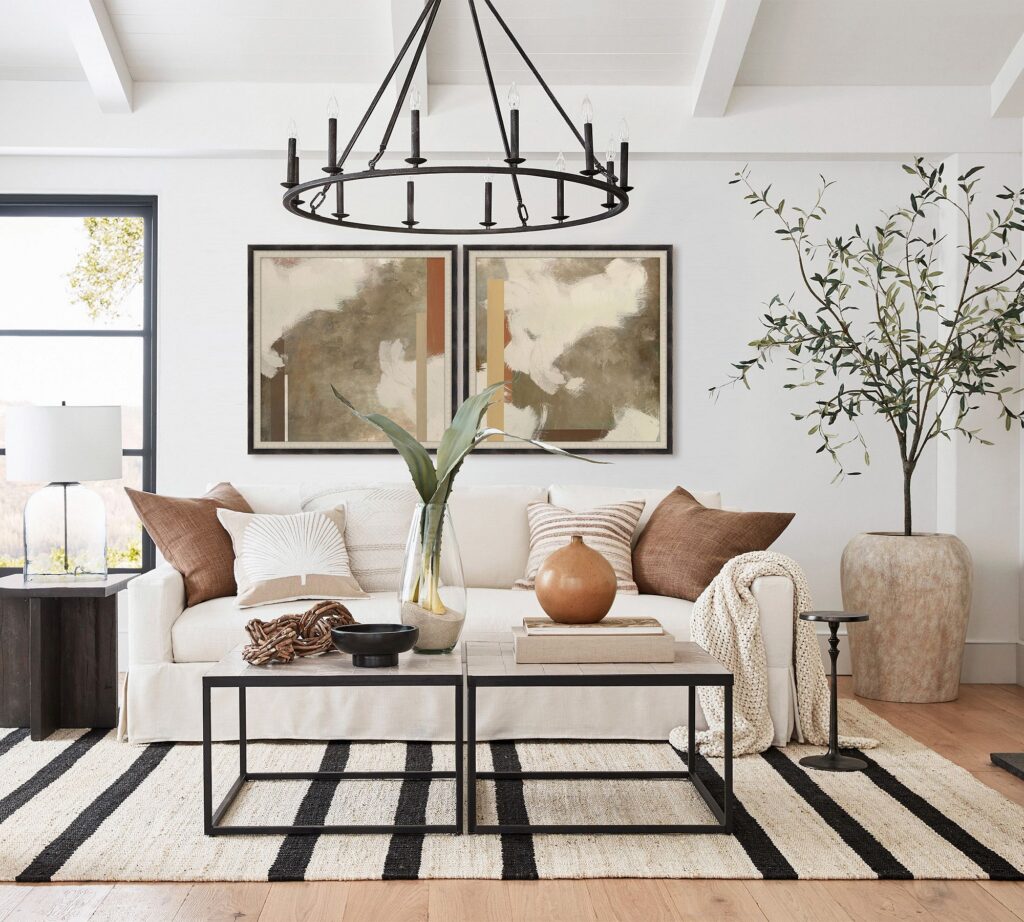
Pottery Barn Sonoma Sands Framed Prints, Starting at $449
What do designers recommend hanging above a sofa?
The wall above the sofa is usually the largest uninterrupted surface in a living room. Because it’s so prominent, whatever you hang there has an outsized impact on how finished the room feels. These are the options we recommend most often:
Oversized artwork
Many homeowners buy artwork that’s too small because they’re worried about overwhelming the room. In reality, undersized art usually has the opposite effect—it makes the furniture look disconnected, and the wall feel unfinished.
One large piece often has more impact than several smaller ones. Oversized artwork creates a strong focal point, simplifies the room, and helps furniture feel connected.
Statement mirrors
Mirrors do more than reflect your room. When placed thoughtfully, they bounce natural light throughout the space, making smaller or darker living rooms feel brighter and more open. We often recommend mirrors opposite windows whenever possible.
Gallery walls
A gallery wall works well when you have meaningful pieces you’d like to display together. The key is making it feel intentional. Instead of adding pieces one at a time, lay out the entire arrangement on the floor first so you can balance the spacing, sizes, and overall shape, then recreate the same configuration on the wall.
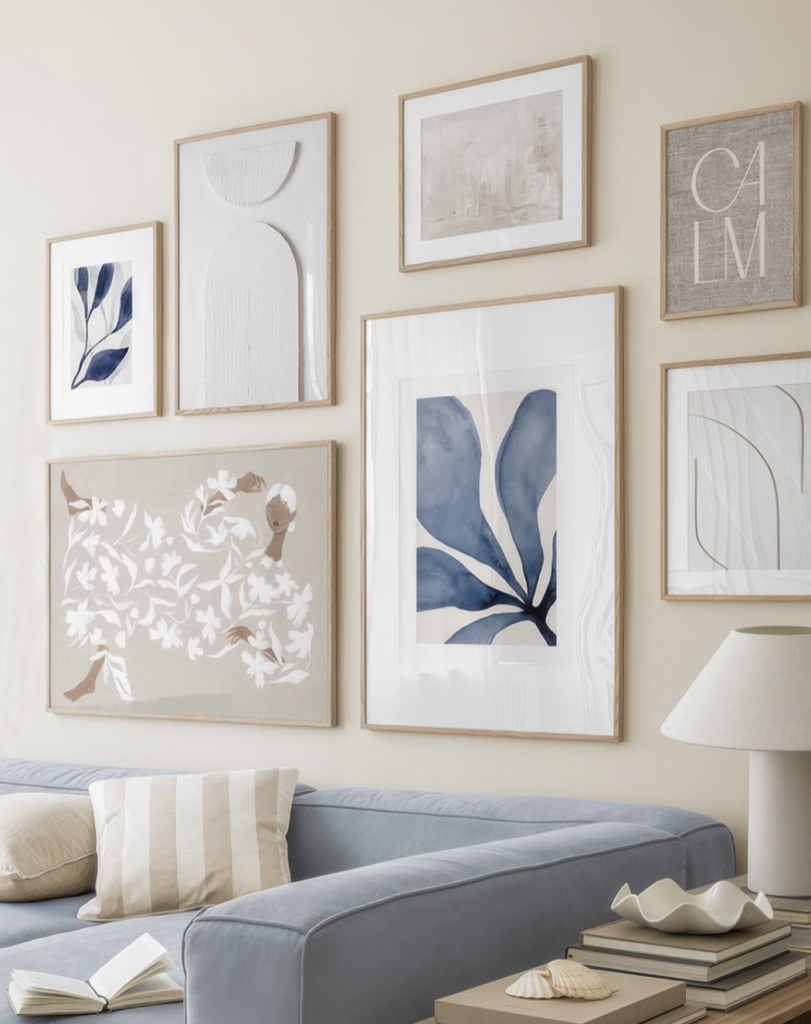
Desenio Blue Hues Gallery Wall, $1,028.75
Why is artwork almost always too small?
This is probably one of the biggest mistakes we see. People find a piece they love, hang it up, step back, and wonder why it doesn’t quite work. Most of the time, the issue isn’t the artwork itself. It’s the scale.
As a general guideline, artwork above a sofa should span roughly two-thirds to three-quarters of the sofa’s width. Going larger creates confidence. Going smaller often creates visual clutter because the wall still feels empty.
When we’re designing a room, we almost always encourage clients to go bigger than they were originally considering.
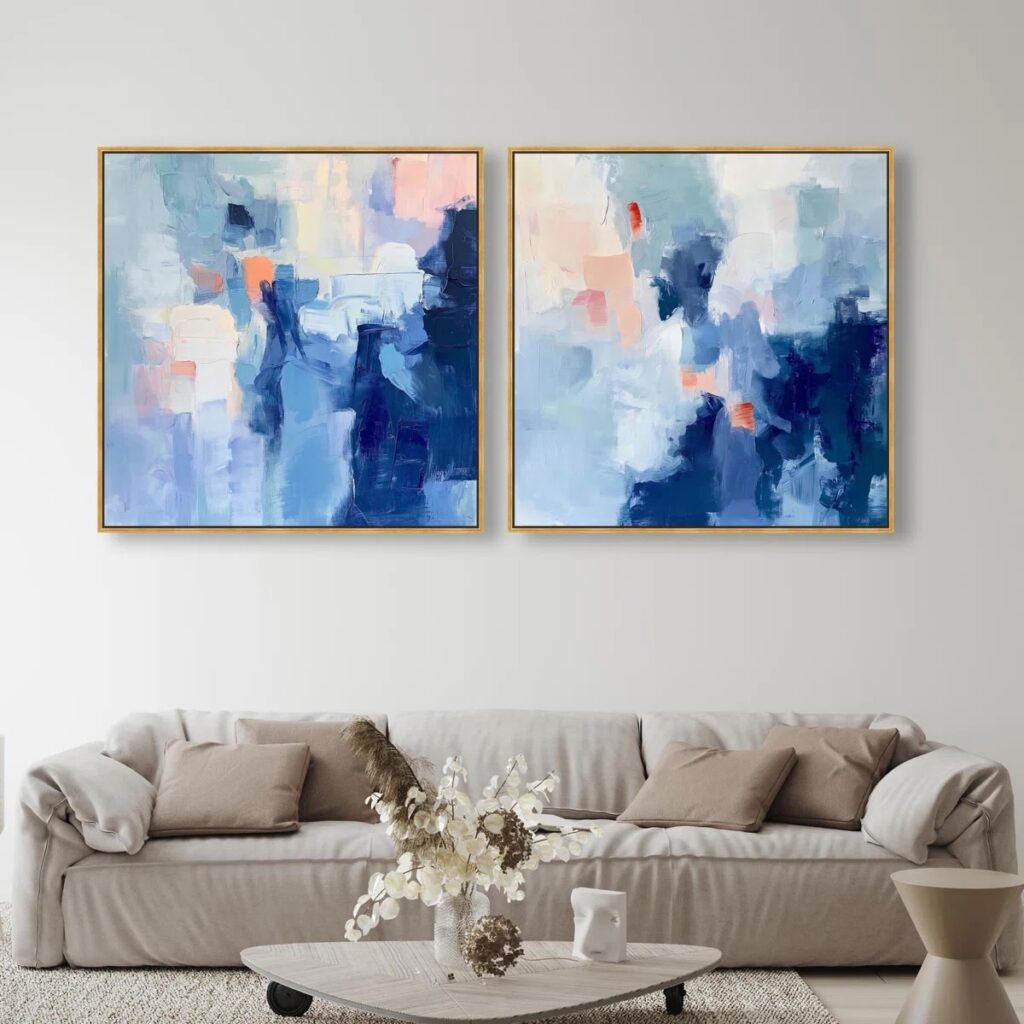
Oliver Gal Boundless Blues Set Abstract, Perigold, S2,360
What makes artwork look expensive?
If you know us by now you know it’s not necessarily about the price tag. Some of the most polished rooms we’ve designed include affordable prints mixed with original artwork, family photography, or vintage finds. What matters more is how it’s presented.
Artwork tends to look more elevated when you:
- Choose pieces that are appropriately scaled for the wall.
- Frame artwork consistently and professionally.
- Hang artwork at eye level instead of too high.
- Leave enough breathing room around each piece.
- Use lighting to highlight statement pieces.
These details make even budget-friendly artwork feel more expensive.
Should every living room have artwork?
Yes, with a caveat. Artwork gives people something to connect with emotionally. It introduces color without requiring new furniture, adds personality that can’t be bought from a furniture showroom, and helps a room feel complete.
That doesn’t mean every wall needs to be filled. Some walls are better left empty.
The goal isn’t to decorate every available surface. It’s to choose pieces that make the room feel balanced and reflect the people who live there.
Your walls can do more than tell the time
Wall clocks had a long run, and for many homes they made perfect sense. But today, your walls have the opportunity to tell a much richer story. Whether that’s a favorite piece of artwork, a meaningful gallery wall, or a statement mirror that brightens the room, choosing décor that reflects your personality will always outlast a passing trend.
If you’re not sure what belongs on your walls, we can help. We work with clients in NYC, Washington, DC, Fairfield County, CT, and virtually nationwide to create homes that feel finished, functional, and personal. Book a complimentary design consultation to get started.