How Do You Make Every Room in Your Home Feel Connected?
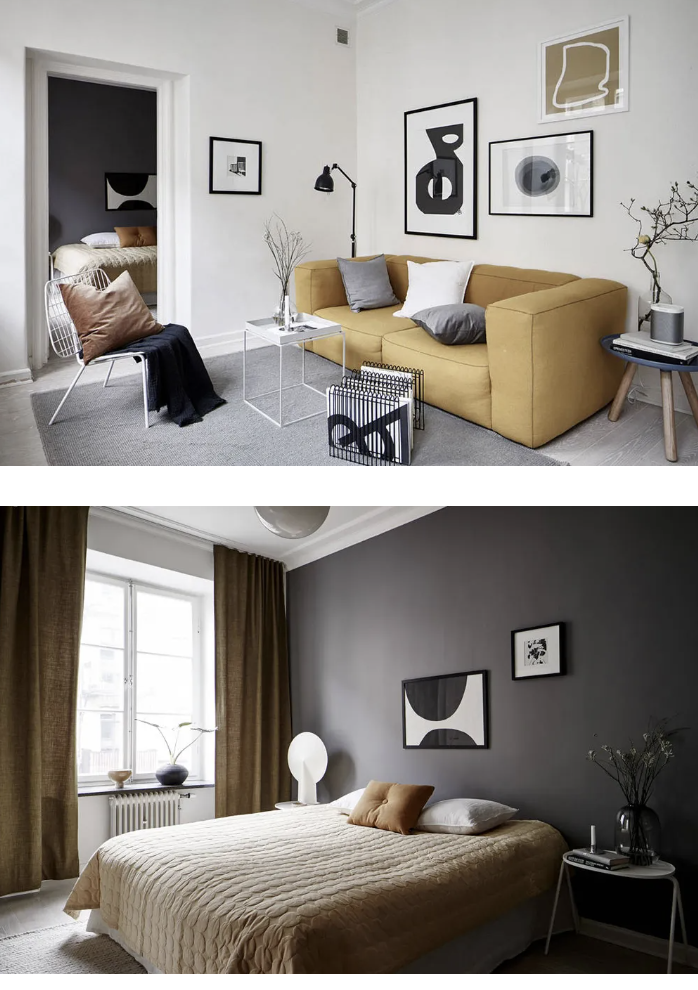
You finish decorating the living room. Then you walk into the dining room and suddenly feel like you’ve entered somebody else’s house. Nothing is necessarily wrong with either room. They just don’t seem to belong together. This happens a lot when rooms are decorated one at a time. You make choices based on what that space needs, but nobody steps back to see how the whole home connects.
To make rooms look cohesive, repeat a few design elements throughout your home. That might include a consistent color palette, complementary wood tones, metal finishes, and furniture shapes, or the same overall design style.
The answer isn’t making every room match. The rooms should feel connected, not identical. It’s creating cohesiveness with complimentary elements and repeating just enough that the house has a common thread.
Do all the rooms in your house need the same color palette?
Sort of. Using the exact same colors everywhere can make the house feel more repetitive than cohesive. Instead, think about a whole-home palette.
Choose a few colors that can appear in different amounts from room to room. A navy that dominates the living room might show up only in artwork in the dining room and again in a pillow or lamp in the bedroom.
The repetition doesn’t have to be obvious.
It just needs to be enough that your eye recognizes something familiar as you move through the home. This works especially well with neutral colors. Repeating the same warm white, cream, black, or soft gray throughout different rooms gives you a consistent base while still allowing each space to have its own personality.
Should your furniture style match from room to room?
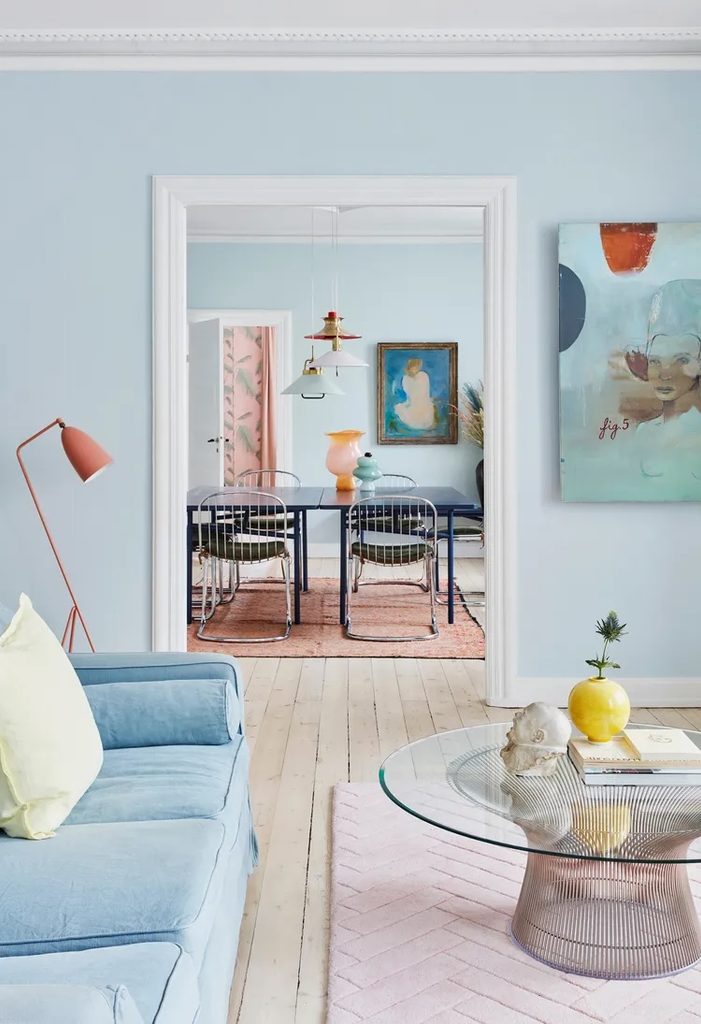
No, but the styles should make sense together. That’s why we recommend figuring out your two-word design style. You identify a feeling word and a style word you lean towards and let them guide you when making design choices.
Nothing kills the vibe of a home faster than everything beling one note: a mid-century sofa in the living room, a mid-century dining table, and a mid-century bed just because you like that style. Your home will feel more interesting when there’s some variety.
How do you mix wood tones throughout a home?
Don’t try to make every wood finish identical. We regularly mix woods, but we pay attention to undertones and repetition. If you have warm oak floors, bring a similar warm wood into another room with a dining table, picture frame, or chair. Then add a darker contrasting wood elsewhere.
The key is to repeat each finish when possible, making the variation look deliberate instead of accidental. We use the same approach when mixing wood tones within one room: repeat finishes and let contrast do some of the work rather than chasing an exact match.
Do metal finishes need to match throughout the house?
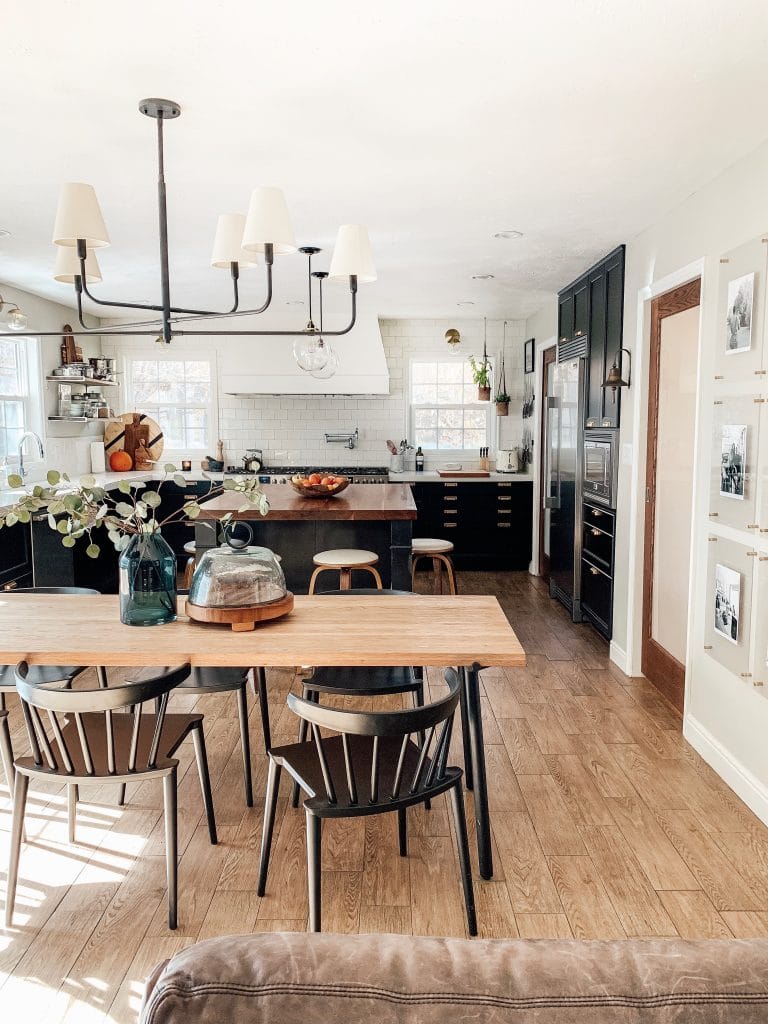
Your kitchen hardware does not need to dictate every lamp, curtain rod, faucet, and picture frame in the house. If black metal appears in the living room lighting, bring it into another nearby room through a frame, chair legs, or hardware. If brass is part of the dining room, repeating it somewhere else keeps it from looking isolated.
Then, choose complementary finishes for other areas. We generally prefer a few repeated finishes over introducing a brand-new metal in every space.
How can adjoining rooms feel connected without looking the same?
Focus on what you can see from one room into the next. Open floor plans make this especially important because multiple spaces are visible at the same time.
Look at:
- color
- wood tones
- rugs
- lighting finishes
- artwork
- furniture shapes
You don’t need to repeat all of them. Choose two or three. A dining room rug might pick up a color from the living room sofa. The dining chairs might repeat the wood tone of the living room coffee table. Black lighting fixtures might appear in both spaces. Small connections are enough.
Give every room something in common
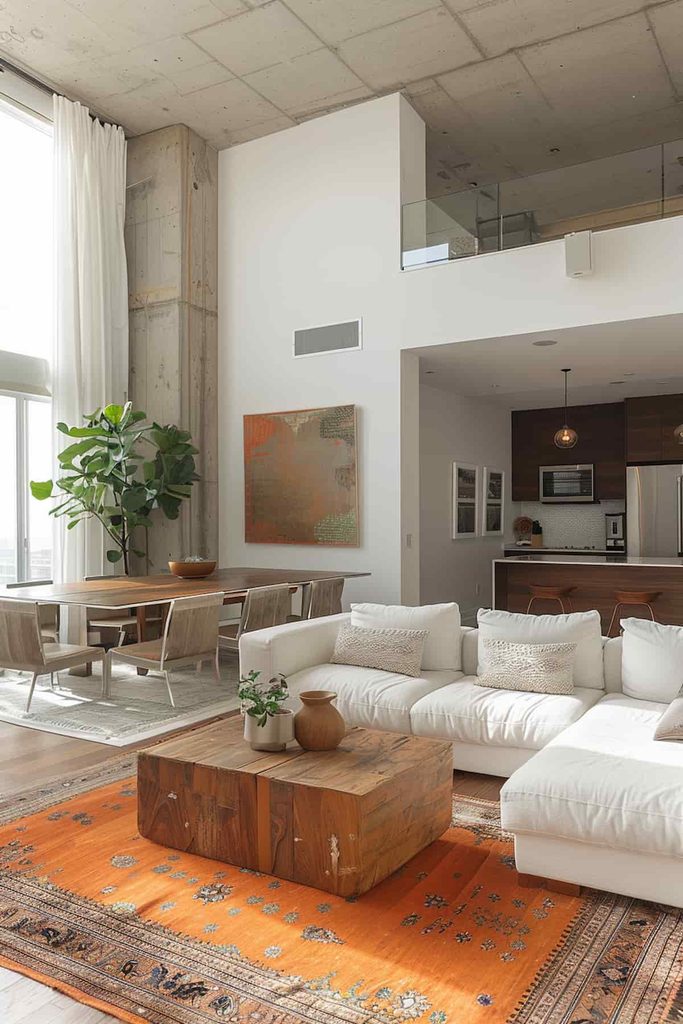
You don’t need to decorate your entire home at once to make it feel cohesive. You just need to look beyond the room you’re standing in. Repeat a few colors.
Bring back a wood tone. Use the same metal finish again. Let certain shapes or materials appear more than once. Then allow each room to have something of its own. That’s usually the difference between a house full of individually decorated rooms and a home that feels like one complete design.
If you’re struggling to make existing furniture, new pieces, and multiple rooms work together, our Makeover Plans can help you create a clear plan before you keep buying. Book a complimentary design consultation to get started.